The Retro Revival: How the “Can’t Hear You I’m Gaming” Design Powers Print-on-Demand Success
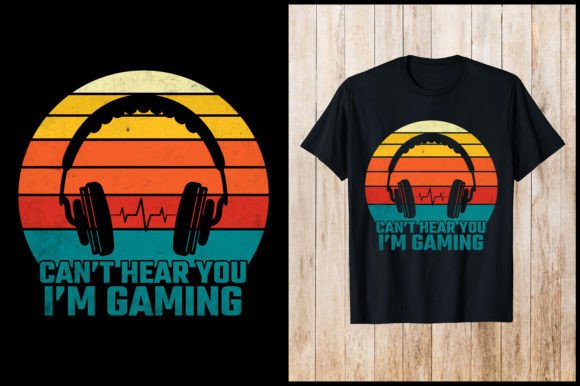
In a world saturated with digital noise, a simple, bold statement can slice through the static. The Can t Hear You I Am Gaming Retro Shirt captures this perfectly, blending a nostalgic visual punch with an attitude that resonates across generations. It’s more than just a graphic; it’s a badge of identity for anyone who has ever been so deeply immersed in a virtual world that the outside simply fades away. For creators, print shop owners, and side hustlers, this design isn’t a mere image—it’s a ready-to-print asset engineered for versatility, scalability, and immediate market appeal. Whether you’re crafting apparel, home decor, or digital merchandise, understanding the full ecosystem of this design file can transform how you approach the booming gaming lifestyle niche.
The Anatomy of a Viral Gaming Statement Design
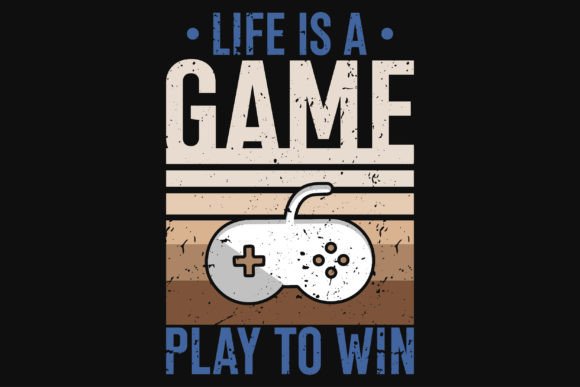
At its core, the visual language of this design taps into classic arcade and early console typography, often rendered with bold outlines, pixel-inspired letterforms, and a vibrant, slightly faded color palette that evokes the 80s and 90s. The phrase “Can’t hear you I am Gaming” is instantly recognizable, functioning as both humor and a boundary marker. It speaks directly to a subculture that values focus, competition, and unapologetic leisure. The retro element isn’t just decorative—it triggers a sense of shared memory, making the wearer part of a larger tribe that remembers quarters, cartridges, and dial-up connections. This emotional hook is what separates a generic quote tee from a high-converting design.
The Can t hear you I am Gaming Retro T-shirt design ready for print typically ships as a carefully prepared bundle. The artboard, set at a generous 4500×5400 pixels, ensures that the graphic retains razor-sharp clarity even on oversized prints. That’s not a random number; it’s a print-optimized resolution that accommodates everything from tiny mug decals to expansive all-over shirt prints without pixelation. When sourcing such assets, you’re not just buying a picture—you’re investing in a production-ready file that understands the physical demands of heat transfer vinyl, direct-to-garment, and sublimation workflows.
Decoding the Professional Print File Formats: What You Actually Get
Anyone who has ever tried to enlarge a low-resolution JPEG for a t-shirt knows the frustration of jagged edges and muddy colors. This is why the design bundle often includes multiple vector and raster formats, each serving a distinct production purpose. Let’s break down what these file types mean for your print quality.
AI and EPS: The Vector Backbone
Adobe Illustrator (AI file) and Encapsulated PostScript (EPS file) are the gold standard for scalability. These Gaming Vector formats define shapes mathematically, so you can stretch the design to fit a gigantic banner or shrink it for a phone case without a single distortion. The Gaming Life EPS is especially crucial for screen printers who need to separate colors into individual layers. Unlike a flattened PNG, a layered EPS allows you to tweak stroke weights, adjust individual color channels, and even modify elements without starting from scratch. It’s the raw, editable source that serious print studios demand.
PNG and SVG: Pixel Precision with Flexibility
A Gaming PNG with transparency is the workhorse of direct-to-garment (DTG) printing and mockup creation. The transparent background means you can place the design onto any colored garment without a white box around it. High-resolution Sublimation PNG files are tailored for polyester items where the dye becomes part of the fabric, resulting in a fade-proof, crack-proof finish. Meanwhile, SVG cutting files are the hidden gem for crafters using Cricut or Silhouette machines. The Gaming Silhouette derived from an SVG allows you to cut intricate heat transfer vinyl for a crisp, multi-layer effect. It’s this combination of vector and pixel formats that transforms a single design into a Gaming Sublimation Bundle that fits every production method.
Beyond the T-Shirt: Unexpected Products That Amplify Revenue
While the Gaming Shirts market is the obvious starting point, limiting this design to apparel leaves money on the table. The real profit lives in product diversification, especially when you already have the correct file types on hand.
- Drinkware and Coasters: A sublimation mug featuring a faded “Can’t hear you I’m Gaming” crest becomes a morning ritual piece. Use the Sublimation Design to wrap entirely around a latte cup or a frosted glass. The 4500px canvas ensures no awkward cropping.
- Throw Pillows and Blankets: The Gaming Graphic scaled to a 16×16 pillow tap into the home decor market. Gamers love decking out their streaming rooms or dens with coordinated textile art. The retro aesthetic softens the tech vibe, making it partner-approved.
- Digital Prints and Smartphone Cases: This isn’t just physical. The best products online Illustration can be offered as instant download printable wall art or used on print-on-demand phone cases, where the pixel-perfect PNG ensures the text remains readable even on a curved edge.
- Stickers and Decals: The Cut Files and SVG formats allow for kiss-cut sticker sheets. Individual elements like a retro controller silhouette or just the text can be separated for multi-piece decal packs, ideal for laptops and consoles.
This product breadth means a single purchase of the design bundle fuels an entire catalog. When you treat the Eps Bundle and Vector Design assets as a launchpad rather than a destination, your store can command a higher average order value by cross-selling mugs, pillows, and totes alongside the core Gaming Shirts.
Why Retro Gaming Aesthetics Dominate Evergreen Niches
Trends come and go, but nostalgia is a renewable emotional resource. The Can t Hear You I Am Gaming Retro Shirt belongs to an aesthetic that continually reinvents itself for new audiences. Today’s 14-year-old playing a modern battle royale might adopt the same pixelated, chunky typeface that a 40-year-old remembers from a dusty arcade cabinet. This cross-generational pull makes the design recession-resistant. The humor—a polite but firm “do not disturb”—has universal appeal in contexts beyond gaming: remote workers, students, or anyone needing focused solitude can relate. That semantic flexibility broadens your targeting options in marketing campaigns.
From an SEO perspective, Gaming Life content aligns with one of the most stable search verticals. The combination of “retro shirt,” “gaming gift,” and “sublimation bundle” consistently drives buyer-intent traffic. By naturally weaving in phrases like Personalized T-shirt and Gaming Sublimation Bundle, your product listings or blog posts reinforce relevance without keyword stuffing. Google’s helpful content update favors in-depth descriptions of product files (their dimensions, uses, and compatibility), which positions this article as genuinely useful to creators deciding which design to buy.
Mastering Print Quality Across All Mediums
Owning the file is step one; executing a flawless print is where many newcomers stumble. The Artboard is 4500 5400px, which directly translates to excellent DPI at common product sizes—but you must match the resolution to the final output method, not just resize randomly.
Direct-to-Garment Versus Sublimation
For cotton tees with DTG, use the Gaming Png at 300 DPI. The transparency lets you preview precisely how the ink will sit, and the anti-aliased edges of the retro text will print crisp. For sublimation on polyester shirts or mugs, the design must be mirrored and pressed at high heat, so the Sublimation Png is calibrated for the slight color shift that occurs during transfer. Always do a test press—the neon pinks and electric blues in a retro design can drift if your ICC profiles aren’t dialed in. This attention to technical detail distinguishes a professional seller from a hobbyist dumping a low-res grab onto a shirt.
Screen Printing and Color Separation
If you’re going the screen printing route with plastisol inks, the EPS vector is your best friend. You can separate colors with precision, and the layers often include a knockout underbase for dark garments. The Gaming Life Eps might already have these layers named helpfully. You can adjust a single spot color to match a pantone without affecting the rest, ensuring brand consistency across multiple product runs. The SVG Cutting Files offer an alternative for one-off glitter or flock vinyl applications—cut, weed, and press for a tactile 3D effect that a simple print can’t replicate.
The Business Case for High-Resolution Bundles Over Freebies
It’s tempting to grab a free low-res design off a wallpaper site, but anyone who’s dealt with a PayPal dispute over a blurry shirt knows the cost. A premium Sublimation Bundle that includes the AI, EPS, PNG, and SVG formats is effectively a business license to create unlimited end products. The consistency of the Gaming Vector across different applications protects your brand reputation. Moreover, the time saved by not manually tracing or cleaning up a fuzzy JPG easily justifies the investment. When your mockups look pristine because the source file was built for print, conversion rates improve organically.
Creators who offer Gaming Sublimation Bundle products on platforms like Etsy or Shopify can package the design in creative ways: a bundle of Gaming Graphic variations, perhaps one with a distressed texture, another with a neon glow. Because the vector backbone is clean, swapping colors or adding effects takes seconds. You can run limited-time variants—like a “Gaming Day” holiday edition—without renegotiating licensing or starting from zero. This agile product development is what keeps a store fresh without ballooning design costs.
Integrating the Design into a Cohesive Brand Identity
Standalone items sell, but a curated collection builds a following. Using the Gaming Silhouette and secondary elements from the Eps Bundle, you can create companion pieces: a “Game Over” mug, a “Loading… please wait” doormat, or a “Player 2 has entered” onesie. All can share the same retro font treatment, color grading, and visual humor. The Illustration style of the main design sets the DNA for the entire line. When a customer buys the Can t Hear You I Am Gaming Retro Shirt and loves it, they’ll come back for the matching zip hoodie or the travel mug precisely because everything looks like it belongs together.
This approach also strengthens your store’s internal linking structure. Product descriptions can reference the Gaming PNG and Vector Design origin, building topical authority around the phrase “retro gaming sublimation design.” Over time, search engines associate your domain with high-quality, printable gaming assets, which boosts visibility for longer-tail queries like “unique gamer gifts under $30” or “vintage game controller graphic.” The Can t hear you I am Gaming Retro T-shirt design ready for print thus becomes a cornerstone product that anchors an entire cluster of SEO-rich content.
Practical Workflow: From Download to First Sale in One Evening
Let’s walk through a real-world scenario. You download the bundle containing the AI file, EPS file, PNG file, and SVG cutting files. First, open the EPS in your preferred vector software to check that all layers are intact. You notice the main text layer and a secondary graphic layer featuring pixelated stars or a retro gamepad silhouette. Export a high-res PNG for your DTG mockup. Create a quick mockup using a smart object in Photoshop: the design snaps perfectly onto the 4500×5400px smart object layer, showing exactly how the Gaming Shirts will look without any distortion. Upload that to your shop with a descriptive title that includes the phrase Personalized T-shirt. That same evening, you adjust a few colors in the original vector and export a sublimation version for a white mug, a phone case, and a tote bag. In under two hours, you’ve populated a micro-niche store with a cohesive, print-ready inventory using a single Sublimation Design source.
Avoiding Common Pitfalls When Working With Print-Ready Graphics
Even with perfect files, missteps happen. One frequent error is ignoring the color mode. The design likely arrives in RGB for digital vibrancy; switching to CMYK without soft-proofing can dull the retro neon punch. Use the Gaming Life Eps to preview spot colors if your printer supports it. Another pitfall is over-scaling on sub-optimal products—a giant wall tapestry requires a vector, not a PNG, to avoid visible artifacts. Always refer back to the Gaming Vector for large format printing, and reserve pixel-based PNGs for DTG and sublimation on standard apparel. Finally, check the licensing terms. Most bundles allow unlimited personal and commercial use for physical products, but if you plan to redistribute the Cut Files as a digital asset, ensure your license permits it. Respecting intellectual property not only keeps you legally safe but also supports the ecosystem of designers who produce these high-resolution best products online Illustration packs.
The longevity of the Can t Hear You I Am Gaming Retro Shirt lies not only in its witty phrase but in the meticulous preparation of the digital files that bring it to life. When you leverage the full power of the AI, EPS, PNG, and SVG formats across a diverse product range, you’re not just selling a shirt—you’re offering a piece of a shared gaming culture, impeccably rendered on every surface. And that, in an industry fueled by passion, is the real winning strategy.