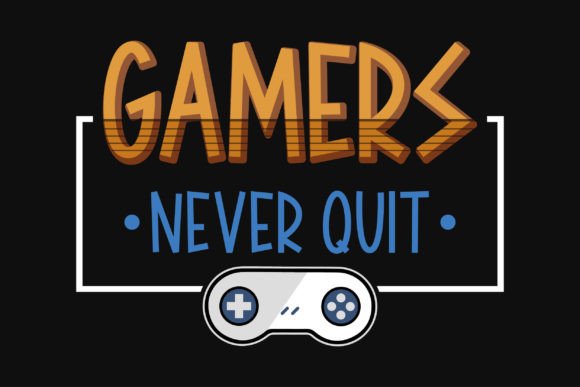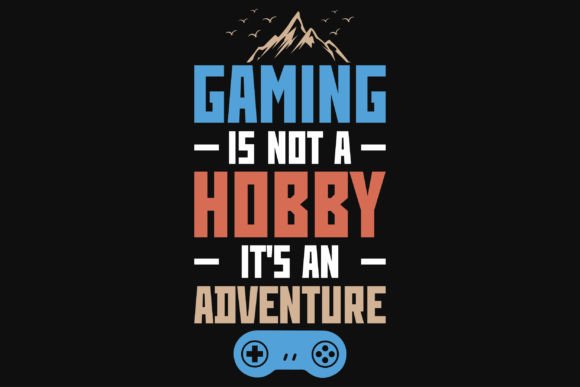
Gaming Typography Tshirt Design: From Concept to Print-Ready Production
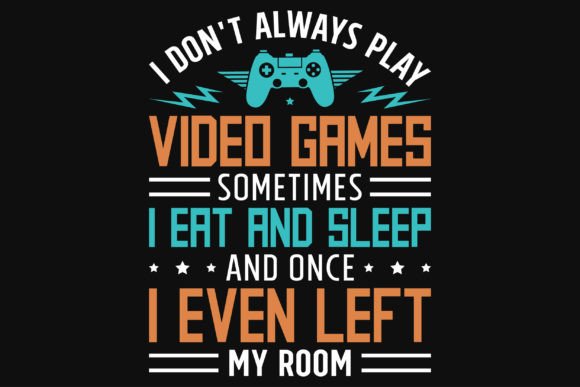
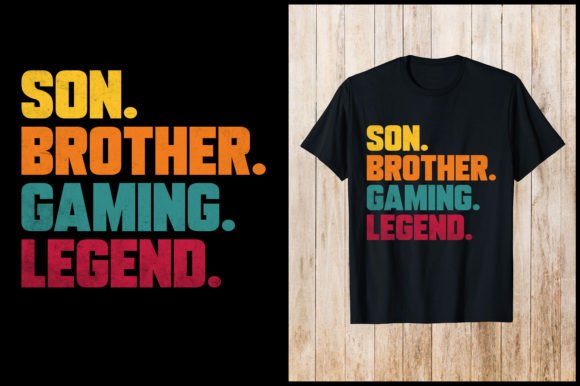
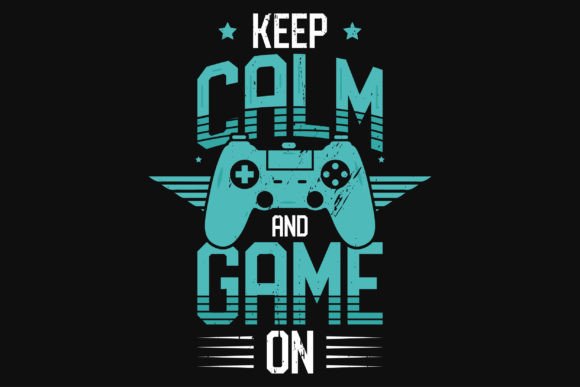
Typography has always been a cornerstone of visual communication, but when it intersects with gaming culture, the result is a distinct design language that resonates with a massive, passionate audience. A Gaming Typography Tshirt Design is not just text on fabric. It is a carefully balanced composition where letterforms, gaming references, and stylistic treatments—think neon glows, pixelated edges, metallic gradients, or controller-inspired motifs—create an identity piece that wearers connect with immediately. For print-on-demand (POD) entrepreneurs, independent merch creators, and established clothing brands, this specific niche offers a reliable pathway to engagement and sales across platforms like Amazon Merch on Demand, TeePublic, Teespring, Redbubble, eBay, and Shopify.
Understanding how to source, evaluate, and implement these designs within a production workflow is what separates a chaotic listing process from a scalable business operation. This article unpacks the practical side of using gaming typography assets, focusing on integration, preparation, and long-term consistency.
Where Gaming Typography Fits in a Merchandise Production Pipeline
Every product-based business has a series of interconnected stages: research, design sourcing or creation, mockup generation, listing optimization, and fulfillment. Gaming Typography Tshirt Design typically enters the pipeline during the design sourcing or creation phase, but its impact ripples outward. A well-chosen typography asset can reduce time-to-market because it eliminates the need to commission custom lettering or spend hours manually adjusting curves and ligatures that already need to evoke a specific gaming aesthetic.
For sellers who operate lean—perhaps a single person managing multiple storefronts—this efficiency is critical. Instead of starting from a blank canvas, you begin with a print-ready file built at 4500 by 5400 pixels, a resolution standard that accommodates the largest printable areas on most POD platforms without quality loss. This lets you move directly into color adjustment, layout tweaks, or combining the typography with complementary graphical elements. The design becomes a flexible component within a broader assembly process rather than a project in itself.
Technical Compatibility and File Format Awareness
One of the most overlooked aspects of integrating purchased or licensed designs into a workflow is ensuring file compatibility with the software you already use. A design bundle that includes EPS, PNG Transparent, and SVG formats covers the three most common use cases. The EPS file preserves full vector editability, which means you can open it in Adobe Illustrator, CorelDRAW, Affinity Designer, or even free tools like Inkscape, and resize, recolor, or deconstruct elements without any loss of fidelity. This is particularly useful if you plan to adapt a gaming typography design for different products—what works on a black t-shirt might need a stroke or outline added for visibility on a white mug.
The SVG format offers similar vector advantages but also plays well with screen-based applications and newer cutting-machine software, giving you unexpected flexibility if your business expands beyond apparel into physical craft goods. Meanwhile, the transparent PNG provides an immediate, no-editing-needed option for quick mockups or for sellers who operate entirely in browser-based design tools that do not handle vector files natively. Having all three formats means you are not locked into one method of working, and you can adapt the asset to whatever toolchain feels most comfortable on a given day.
Preparing the Design for Platform-Specific Requirements
Different POD platforms impose different constraints, and a common mistake is assuming one file works perfectly everywhere without adjustment. Amazon Merch, for instance, has specific dimension requirements for different product types, and transparent PNGs often need to be flattened onto a background color to match the garment if you want to avoid unwanted edge artifacts. TeePublic and Redbubble automatically handle print area scaling, but you still benefit from uploading at the highest resolution possible to future-proof the listing against newer, larger print areas.
With a 100% vector-based Gaming Typography Tshirt Design, resizing is a non-issue. You can confidently scale the design up for an all-over print hoodie or down for a pocket-sized logo placement without introducing pixelation. The vector structure also makes color changes trivial. If a design ships with a neon green and purple palette that works brilliantly on dark backgrounds, you can recolor it within minutes to create a variant that suits light gray, navy, or heather blends. This ability to quickly generate colorway variations helps populate your store with more listings without requiring additional design purchases, improving inventory depth and giving customers more reasons to click into your catalog.
Workflow Integration: A Practical Example
Consider a typical Monday morning for a part-time merch seller who also works a full-time job. They have two hours before their main shift begins. Here is how a gaming typography asset speeds things up without sacrificing quality:
- Step one: Open the EPS file in Illustrator and decide on a background colour. Preview it against a t-shirt template to ensure contrast.
- Step two: Swap the default color palette for a trending duo the seller noticed while researching competitor listings over the weekend.
- Step three: Export a high-resolution PNG and drag it into a pre-built mockup template for a t-shirt, a hoodie, and a mug.
- Step four: Upload the final PNG to two or three platforms, write a short description targeting gaming gift keywords, and schedule the listings.
What would have taken a bespoke designer several days—and cost significantly more—becomes a repeatable, low-friction task. The seller has clarity on the intellectual property usage because these are original typographic compositions, not ripped assets from copyrighted games. That peace of mind is essential when listing on platforms that actively scan for infringement.
Quality Control and Print Consistency
The phrase “print-ready” carries weight only if you understand what it means in context. A Gaming Typography Tshirt Design sized at 4500 by 5400 pixels with a 300 DPI resolution provides enough data for direct-to-garment (DTG) printers and sublimation processes to render sharp edges, smooth curves, and solid color fills. However, you should still maintain a checklist before finalizing any upload:
- Verify that text elements are not too thin, as fine lines can break on textured fabric.
- Check that any distressed or grunge effects included in the typography read clearly at the intended print size.
- Ensure that semi-transparent effects, if present, are flattened correctly for PNG output to avoid unexpected results during the printing process.
- Review the design on multiple screen types—a design that looks crisp on a high-end monitor can appear overly dark on a phone, and most customers shop on mobile devices.
While the source file might be flawless, your export settings and platform compression can introduce variables. A disciplined exporter tests a sample print at least once per new design or colorway to confirm that the on-screen rendering matches the physical outcome. Many POD platforms offer sample orders at a reduced price, and factoring this small cost into your business overhead prevents negative reviews and returns stemming from print-quality mismatches.
Customization Depth Without Design Overwhelm
One of the strongest selling points of a well-constructed typography bundle is the ease with which you can make meaningful changes. Because these designs are built with editable text layers or clearly separated elements, you can personalize them for seasonal events, esports teams, streamer communities, or specific game titles without rebuilding the core structure. This modular approach supports a content strategy where one base design spawns five or ten variations, each targeting a slightly different micro-niche within the gaming sphere.
This practice also aligns with SEO best practices on marketplaces. Having variations lets you test different title keywords, tag combinations, and thumbnail presentations without reinventing the design wheel each time. Over weeks and months, you gather data on which style of typography—retro arcade, futuristic esports, minimalist gamer quotes—performs best with your audience, and you adjust future sourcing and creation efforts accordingly.
Long-Term Use and Asset Organization
As your design library grows, file management becomes non-negotiable. A designer or seller who accumulates dozens or hundreds of gaming typography t-shirt design assets needs a structured system to avoid wasting time searching for a specific file six months after purchase. Create a folder hierarchy that separates files by format, with subfolders for color variations and platform-specific exports. Label everything consistently—for example, “Gaming-Type-Strong-Team-NeonV1-EPS” and “Gaming-Type-Strong-Team-NeonV1-PNG” ensure that both you and any virtual assistants you might hire later can find assets without confusion.
Backing up these files in cloud storage alongside your working files adds a layer of security. Hard drive failures happen, and when you have invested in premium, 100% vector designs, you do not want to lose access. The small monthly cost of a cloud backup service or a dedicated external drive pays for itself the first time you recover a best-selling design that suddenly becomes relevant again due to a trending game release or nostalgic revival.
Applying Typography Designs Across Multiple Products
A narrow focus on t-shirts leaves money on the table. The same Gaming Typography Tshirt Design that sells on a unisex tee can translate effectively to hoodies, crewnecks, long-sleeve shirts, tank tops, phone cases, tote bags, posters, and even home decor like pillows or wall art, depending on the platform. The vector foundation means you can reposition, warp, or rearrange the typography to fit different aspect ratios without starting from scratch.
This product-multiplying strategy improves the return on investment for every asset you acquire. If you spent time customizing a design for a specific color palette, that effort now distributes across five products instead of one. When a customer sees your design on a t-shirt and then discovers it is also available on a matching mug or sweatshirt, the likelihood of a multi-item order increases, raising your average order value without additional advertising spend.
The Human Element: Why Gaming Typography Connects
Outside of the technical workflow, it is worth understanding the psychological hook. Gaming typography leverages familiarity and identity. Fonts that mimic in-game menus, achievement unlock text, or classic console boot screens trigger recognition and nostalgia. The wearer signals membership in a broader community without needing to shout about a specific title. This broad appeal reduces the risk of listing designs that are too narrowly tied to one game, which can date quickly or fall out of favor.
From a copywriting and listing perspective, you can lean on this broad connection. Describe the design in terms of feeling, energy, and shared experience rather than just literal visual elements. This approach gives your product descriptions a voice that search algorithms and human readers alike respond to more favorably than a dry list of specifications.
Scaling Your Operations With Design Consistency
As you scale from 10 listings to 100 or more, the consistency of your design assets becomes a quiet superpower. When every Gaming Typography Tshirt Design follows similar quality standards—vector-based, high-resolution, easy to modify—you build operational predictability. You know exactly how long it takes to prepare a new listing. You know the export settings that work. You can delegate tasks to freelancers without extensive onboarding because the source files behave predictably.
This reliability also matters when you collaborate with print providers who might have direct access to your uploaded files. A poorly constructed raster image with stray pixels or unexpected transparent holes creates back-and-forth delays that stall production, especially during high-volume periods like the holiday shopping season. Vetted, premium designs reduce these friction points significantly.
Ultimately, the role of gaming typography in your merchandise strategy is both creative and logistical. It is a visual language that speaks directly to a buying audience, wrapped in a file structure that respects the practical demands of ecommerce. When you select designs that arrive with EPS, transparent PNG, and SVG formats, built as pure vectors, and sized for immediate use, you remove barriers that often discourage new sellers and slow down experienced ones. The path from concept to customer becomes shorter, smoother, and easier to replicate. And in a competitive market where speed, quality, and consistency decide who stays visible, that operational clarity is one of the most valuable assets you can build.